
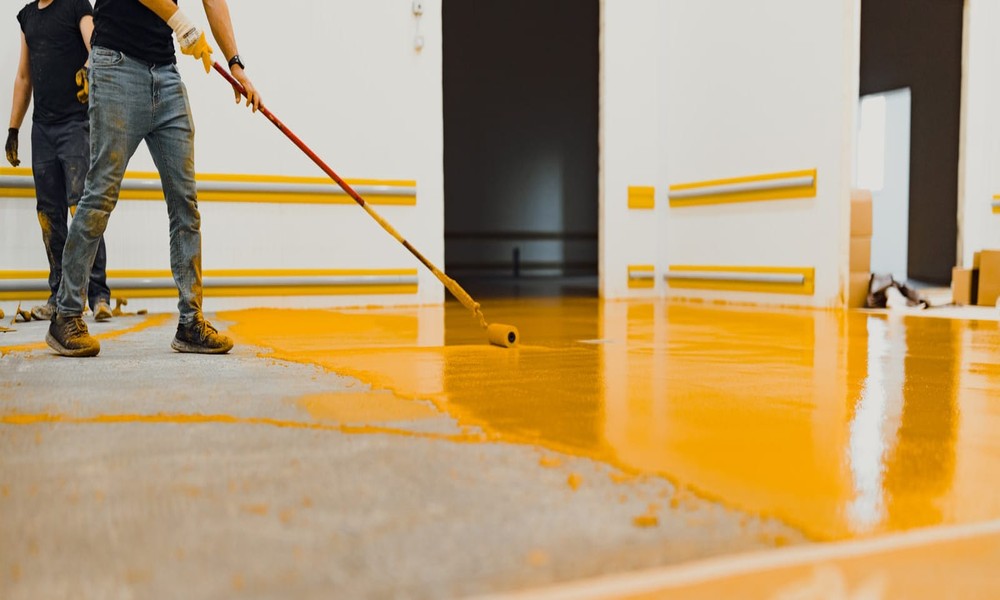
Polyurethane flooring is one of those materials that rewards careful attention, the kind of surface that looks simple until you begin to understand what it is actually doing beneath your feet. It absorbs. It flexes. It resists. And it does all of this quietly, without complaint, across years of continuous industrial and commercial use. Floors are the most abused surfaces in any built environment, and yet they are rarely thought about until something goes wrong. With a polyurethane floor system, very little tends to go wrong.
What Makes Polyurethane Flooring Different
There is a tendency in construction to treat all resin floors as interchangeable, as though epoxy and polyurethane were simply different brand names for the same idea. They are not. Polyurethane flooring is chemically distinct from epoxy in ways that matter enormously in practice. Where epoxy is rigid, polyurethane is elastic. That elasticity is not a weakness. It is precisely the quality that allows a polyurethane floor to absorb impact without cracking, to accommodate the minor structural movements that occur in any building over time, and to remain intact under conditions that would cause a more brittle surface to fracture.
The chemistry begins with the reaction between a polyol and an isocyanate, which produces a polymer with a flexible molecular backbone. This backbone is what gives polyurethane resin flooring its characteristic resilience. Formulators can adjust the ratio of these components to produce systems that range from relatively firm, for areas requiring high abrasion resistance, to noticeably flexible, for environments subject to thermal cycling or vibration.
The Performance Features That Matter
When evaluating a polyurethane flooring system, the performance characteristics that professionals examine first are chemical resistance, thermal tolerance, mechanical strength, and hygiene. Each of these qualities reflects a specific demand that real industrial environments place on their floors every day.
Key performance features include:
- Outstanding resistance to a broad range of chemicals including organic acids, alkalis, cleaning agents, and food-grade oils
- Thermal tolerance from below freezing to elevated process temperatures, making the system well-suited to environments with significant temperature variation
- High impact and abrasion resistance, capable of withstanding heavy foot traffic, trolley wheels, and forklift operations
- Seamless, non-porous surface that prevents bacterial colonisation and supports rigorous sanitation protocols
- Anti-slip finishes available through the incorporation of aggregate broadcasts, providing safe working surfaces in wet or contaminated conditions
- Low volatile organic compound formulations available for environments where air quality is a priority
In Singapore’s industrial flooring sector, where food safety and pharmaceutical compliance are subject to strict regulatory oversight, the non-porous nature of polyurethane flooring has made it the specification of choice for facilities that cannot compromise on hygiene. As one observation from Singapore’s flooring industry notes: “Polyurethane systems have become the benchmark for food processing floors in Singapore because they combine hygiene compliance with the kind of durability that tropical operating conditions demand.”
Thermal Resistance and Cold Storage Applications
One of the most technically demanding environments for any floor is a cold storage facility. The repeated cycling between ambient and sub-zero temperatures creates thermal stresses that cause many flooring materials to delaminate, crack, or heave. Polyurethane flooring, particularly cementitious polyurethane systems, is specifically engineered to handle this challenge.
Cementitious polyurethane floor systems incorporate a blend of polyurethane resin and Portland cement, producing a material that combines the chemical resistance of a resin floor with the compressive strength and thermal stability of a cementitious screed. The resulting system can withstand temperatures as low as minus 40 degrees Celsius without losing adhesion or developing surface defects. For Singapore’s cold chain logistics sector, which handles everything from pharmaceutical cold storage to frozen food distribution, this capability is not a luxury. It is a necessity.
Applications Across Key Sectors
Polyurethane flooring systems serve a wide range of industries, and the reasons for their selection vary meaningfully from one sector to the next.
- Food and beverage processing plants, where chemical resistance to organic acids and hot wash-down procedures is essential
- Cold storage and refrigerated warehouse facilities, where thermal cycling demands a floor that will not delaminate or crack
- Pharmaceutical and biomedical manufacturing, where contamination control and ease of sanitisation are non-negotiable
- Breweries and beverage production facilities, where floors must withstand lactic and citric acids alongside heavy vehicular traffic
- Commercial kitchens and food preparation areas, where slip resistance and rapid cleaning turnaround are daily requirements
- Industrial manufacturing plants, where mechanical loading from machinery and logistics equipment is constant
Installation and Maintenance Considerations
A polyurethane floor system is typically installed at thicknesses ranging from two millimetres for light-duty applications to nine millimetres or more for heavy industrial environments. The substrate must be properly prepared, usually by diamond grinding or shot blasting, to achieve the surface profile and cleanliness that ensures lasting adhesion. Moisture in the concrete substrate is a particular concern in Singapore’s humid climate, and moisture-tolerant polyurethane primers are routinely specified to address this condition.
Maintenance is straightforward. Regular sweeping and mopping with pH-neutral cleaning agents is sufficient for most applications. Periodic inspection of the surface for signs of wear or delamination allows minor repairs to be carried out before they become significant defects. Unlike tiled or jointed systems, there are no grout lines to clean or reseal, and no junctions that accumulate contamination over time.
Conclusion
There is something satisfying about a material that does exactly what it is asked to do, day after day, without drama or failure. Polyurethane flooring is that kind of material. It is not fashionable in the way that decorative surfaces can be, but it is dependable in the way that an industrial environment demands. From cold storage facilities in Singapore’s logistics parks to pharmaceutical clean rooms and food processing plants, the evidence accumulates steadily and without contradiction. When performance, hygiene, and longevity must all be achieved within a single flooring specification, the answer is almost always polyurethane flooring.