

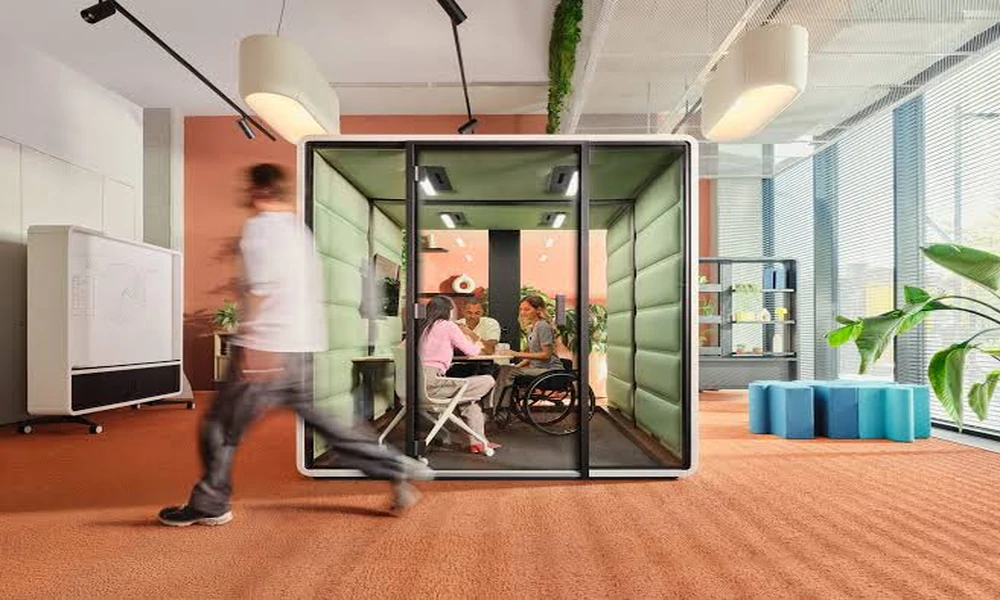
Picture Mei arriving at her desk on a Monday. She likes her job. But by ten she has hunted for a quiet corner to take a call, given up, and ended up in the stairwell. It is a small thing. It also happens to someone on your team, in some form, every single day.
An office is not just where work happens. It quietly decides how work happens: who talks to whom, who can focus, who slowly burns out. A renovation is your rare chance to fix that on purpose, instead of living with whatever layout you happened to inherit. The trick is knowing what to actually change.
Design For How People Work
It is tempting to start with the look. The open-plan photo, the exposed ceiling, the row of plants. But the most important question is not how the office looks. It is how your people actually spend their hours inside it.
Most advice pushes open, collaborative spaces, and here is what those guides skip. Openness helps the chatter and quietly hurts the deep work. A room built entirely for collaboration punishes anyone who needs an uninterrupted hour to think. The real answer is balance, not one or the other.
So watch first. Notice where your team goes to concentrate, where they gather, where they bump into each other by happy accident. Design to what you see, not to a mood board.
The Mistake Everyone Makes
The costly error is spending where guests look instead of where staff live. The gleaming reception. The boardroom nobody books. Meanwhile the desks people sit at for eight hours a day stay cramped and loud.
People make this mistake because the lobby is the part they are proud to show off. It feels like the renovation. But your team does not live in the lobby. They live at their desks, in the meeting rooms, in the little corner where they eat lunch. That is where the money should go.
A Simple Test Before You Start
You do not need a consultant to begin. You need a week of paying attention. Before a single wall moves, run a quiet audit of your own space.
Spend a week noting:
- where people go when they need silence
- where the useful, unplanned conversations happen
- which rooms sit empty and which are always full
Those three answers tell you more than any catalogue. Build more of what your team already reaches for, and quietly retire whatever nobody uses.
When To Bring In Help
You can work out the intent yourself. Turning it into walls, wiring, lighting, and airflow is another matter. A renovation touches things you cannot easily undo, and getting the layout wrong in concrete is slow and expensive to fix later.
This is where the right professionals earn their fee, because they translate how your team works into a space that supports it. If your plans are getting bigger than a weekend project, it can be worth bringing in an experienced office renovation company that designs around your people rather than around a template. A good one will ask how your teams actually work before they ever show you a single mood board.
Let The Space Breathe
The details that seem soft are the ones people feel most. Natural light. A room where a phone call does not echo across the whole floor. Somewhere to step away for five minutes without having to leave the building.
None of this is mere decoration. It is the difference between a team that drags through the afternoon and one that does not. When you plan the renovation, protect these human details first. They cost less than you think, and they are what people quietly remember.
Mei should not have to take her calls in the stairwell. The point of a renovation is not a nicer photo for the website. It is a room that helps your people do their best work, hour after hour, without having to fight the space to get there. Get that right, and everything else, the plants and the paint, falls easily into place.
