

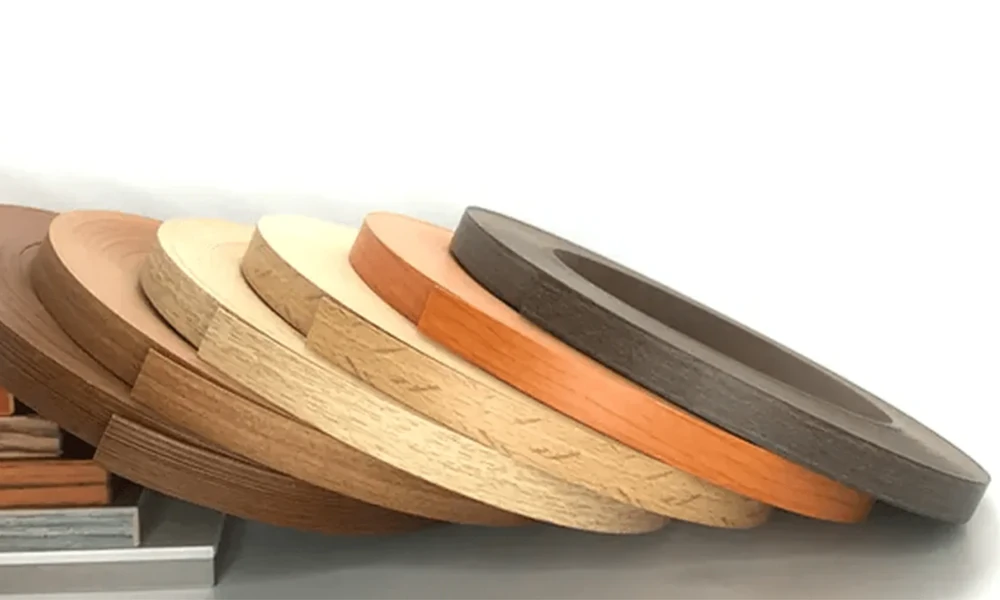
A piece of furniture can look perfectly finished when it leaves the workshop, only for the laminate edge to start peeling, cracking or developing gaps after installation. Even a small problem along the edge can make a cabinet, wardrobe or shelf look poorly finished and may worsen with regular use.
This is where the need for right laminate edge banding comes in, with consideration to the following factors – the substrate, adhesive, pressure, and proper cutting techniques. Knowing the different issues and properly managing them helps achieve elegant, sturdy, durable edges on furniture like cabinets, wardrobes, shelves, and others.
Common Edge Banding Problems and Their Causes
Peeling is one of the most common problems. If the edge begins to peel off, it can be due to the adhesive used, application of incorrect temperature and pressure and presence of dust on the surface while applying the band.
Brands such as Royale Touché offer laminate solutions for varied furniture applications, while careful laminate edge banding installation can ensure cleaner, stronger and more professional-looking results . Depending on the type of glue and material applied in the bonding, the edge may be rebonded through the recommended method. The other common problem is uneven trimming where the edge may appear much thinner than the adjoining area due to forceful removal of excess material protruding as a result of poor trimming. Edge gaps may also arise when banding is done inaccurately without applying proper pressure during the procedure. Gaps that are present trap the dust and moisture, leaving the furniture looking incomplete.
Tips for Clean and Strong Edges
Good preparation is one of the key laminate edge finishing tips for carpenters.
In order to achieve quality standards and results, carpenters can follow the above simple tips
Make sure that the board edge is flat, smooth, clean, and devoid of any particles when applying an adhesive. It should be mentioned that both laminate and substrate materials should be suitable for the specific adhesive chosen.
Temperature and pressure used when bonding a laminate should comply with the adhesive manufacturer’s guidelines. In case of insufficient pressure applied, the bonding may not turn out to be good. Too much temperature adversely affects the laminates. It is recommended that, during an edge band peeling fix, you do not simply apply adhesive over the existing loosened layer. The right approach to repairing damaged edge bands involves removing the affected area, cleaning and preparing the surface, and then rebounding the edge band. Attention must also be paid to corners which tend to break more easily under impact. It is recommended to carefully trim and smoothen corners to prevent chipping and lifting. One other option is to go for edge band peeling fix in terms of colour and finish to the laminate. In order to achieve quality results, carpenters can follow the above simple tips.
Conclusion
Well-finished edges improve both the appearance and longevity of laminate furniture. By identifying peeling, gaps, uneven trimming and corner damage early, carpenters can avoid larger finishing problems. Brands such as Royale Touché offer laminate solutions for varied furniture applications, while careful laminate edge banding installation can ensure cleaner, stronger and more professional-looking results.
